
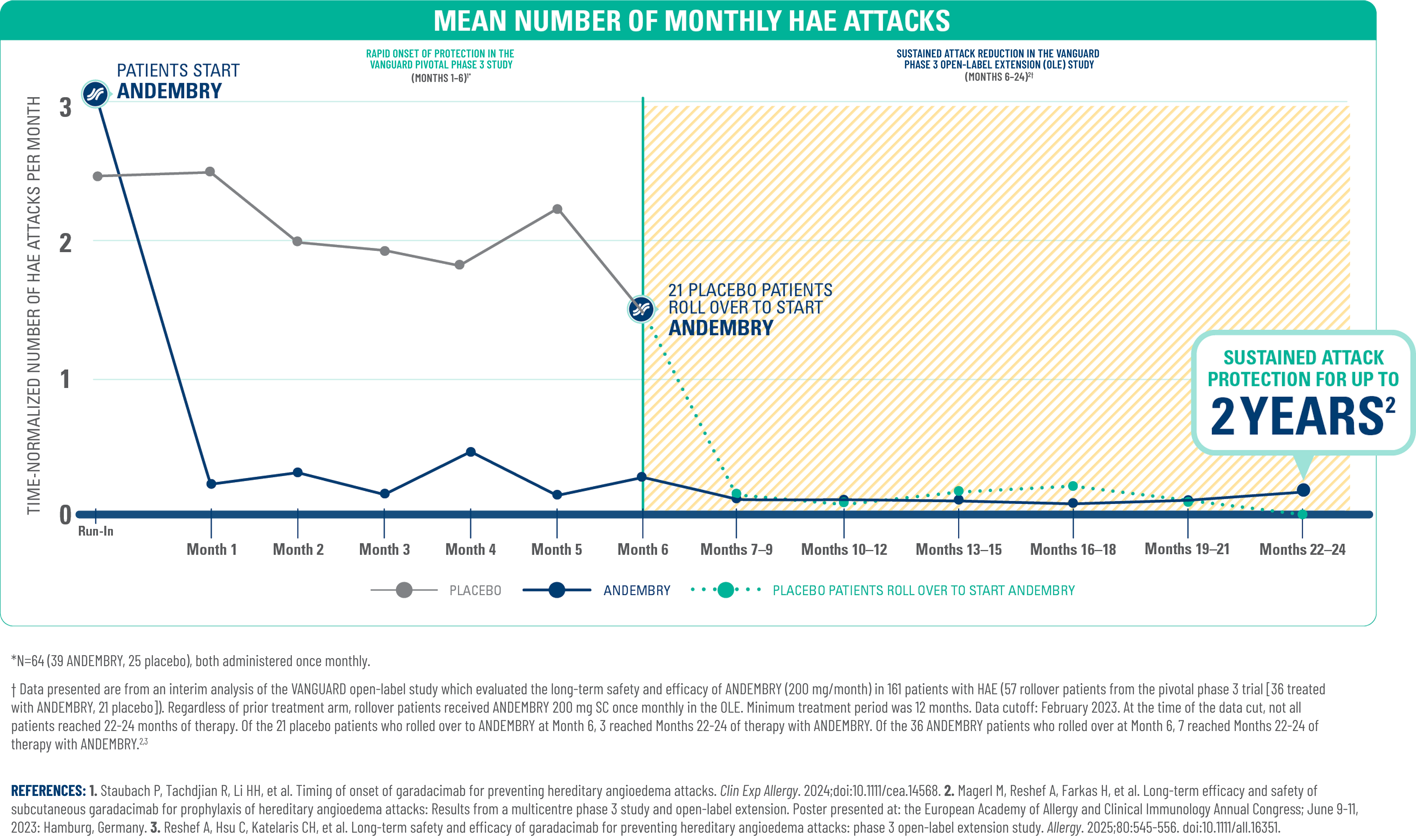
Fast, Effective & Sustained Protection1-3
As demonstrated in the VANGUARD Pivotal Phase 3 Study
ANDEMBRY significantly reduced HAE attacks
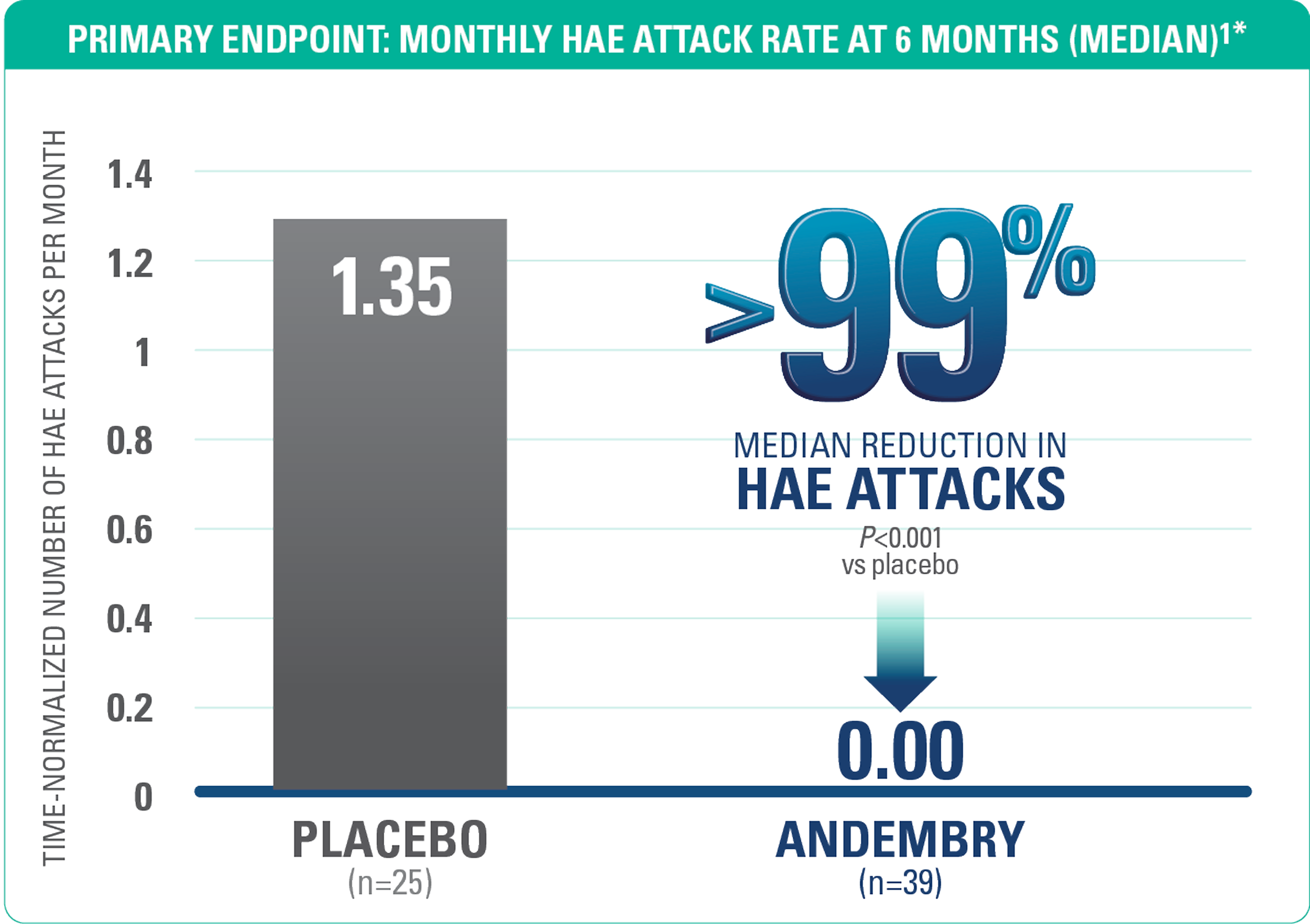
MEAN ANALYSIS:
The least squares mean reduction in the number of HAE attacks per month with ANDEMBRY vs placebo was 89%; 0.22 vs 2.07, respectively (P<0.001).
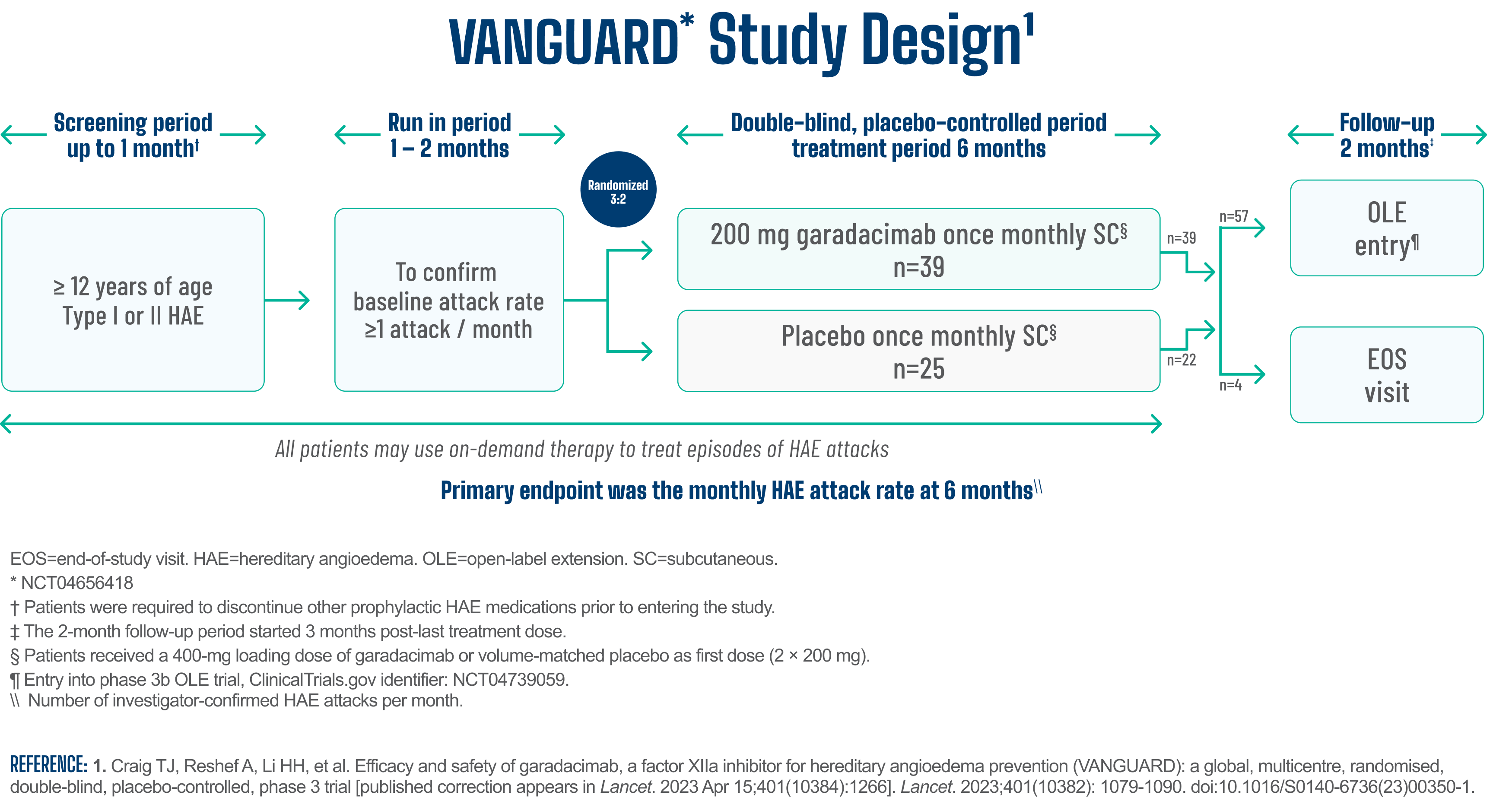
* The primary endpoint of the number of HAE attacks per month was summarized descriptively for the 6 months of the Active Arm and the 6-month Placebo Arm period by median and mean.
As demonstrated in the VANGUARD Pivotal Phase 3 Study
ANDEMBRY Demonstrated a Significant Reduction in HAE Attacks Requiring Rescue Medication and Number of Moderate or Severe HAE Attacks
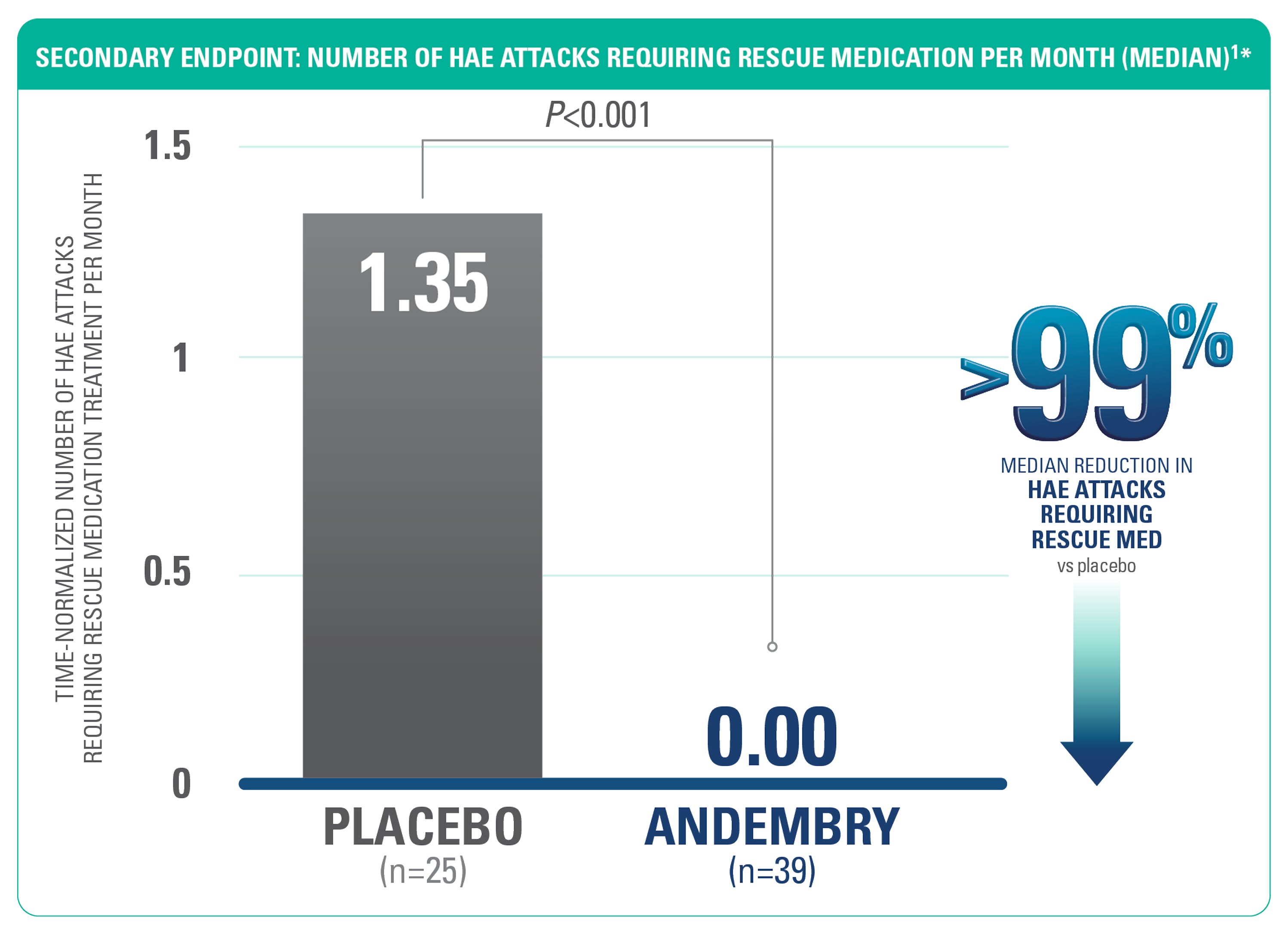
MEAN ANALYSIS1:
The mean reduction in the number of HAE attacks per month requiring rescue medication with ANDEMBRY vs placebo was 88%; 0.23 vs 1.86, respectively (P<0.001).
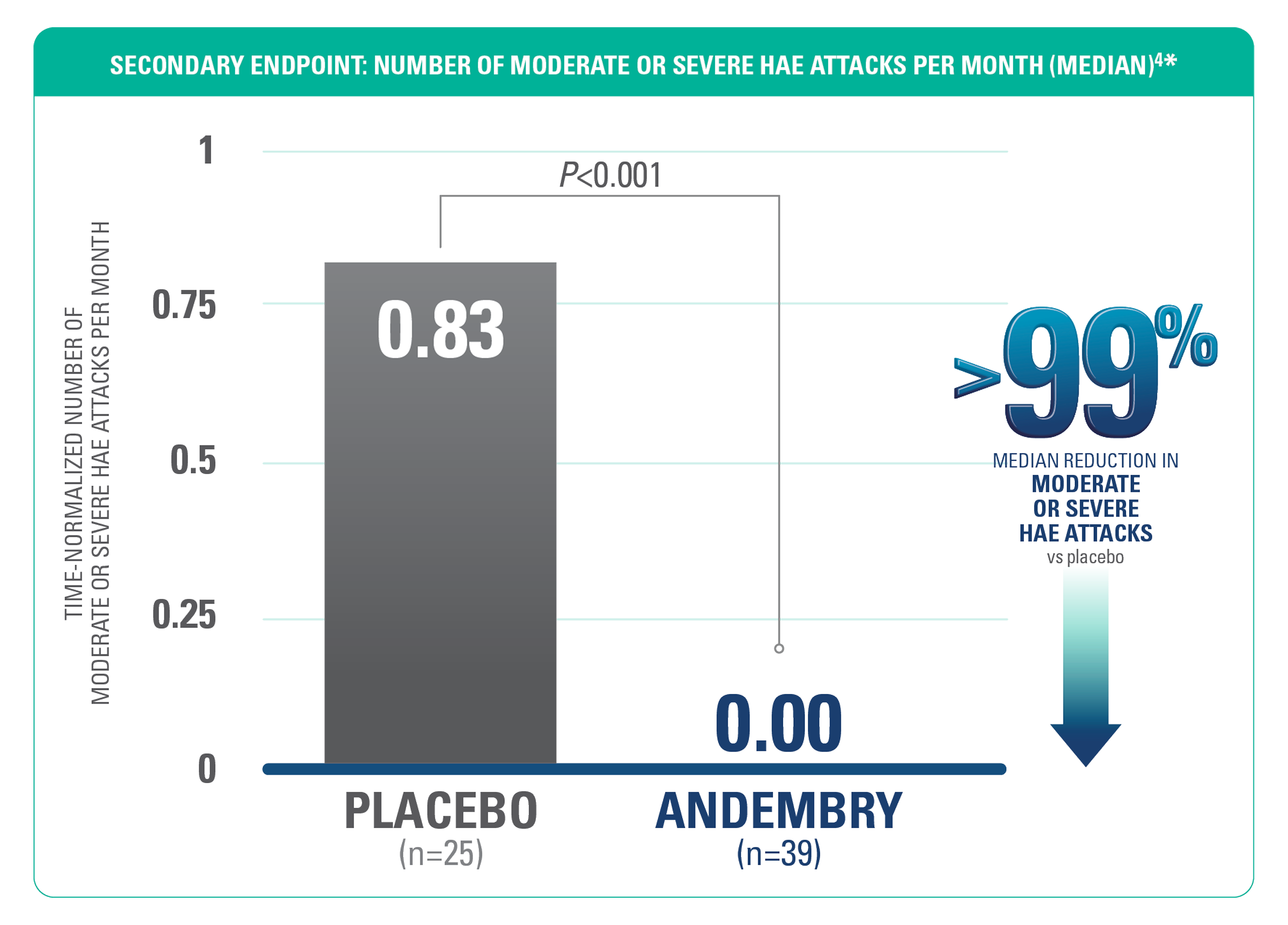
MEAN ANALYSIS1:
The mean reduction in moderate or severe HAE attacks per month with ANDEMBRY vs placebo was 90%; 0.13 vs 1.35, respectively (P<0.001).
* The secondary endpoints of the number of HAE attacks requiring rescue medication per month and the number of moderate or severe HAE attacks per month were summarized descriptively for the 6 months of the Active Arm and the 6-month Placebo Arm period by median and mean.
Post Hoc Analysis of Pivotal Phase 3 (VANGUARD) Study
ANDEMBRY has a fast onset of protection*†
Substantial reductions in HAE attacks observed from week 12‡§
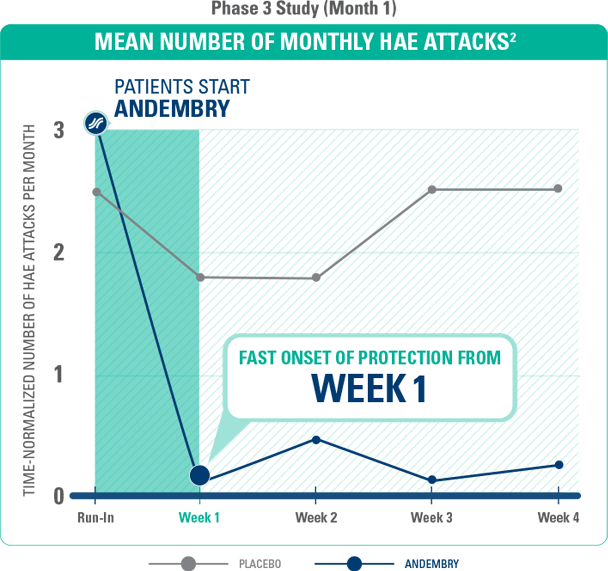
* Garadacimab-gxii concentration-dependent inhibition of FXIIa-mediated kallikrein activity was observed in patients with HAE. Inhibition of FXIIa-mediated kallikrein activity was observed after the first dose.
† In a PK study of healthy volunteers, garadacimab-gxii exposure (based on AUCtau and Cmax) following the initial subcutaneous administration of loading dose of 400 mg (2 doses of 200 mg) is 133% of steady-state exposures following 200 mg subcutaneous once monthly.
‡ HAE attacks were assessed based on actual numbers of attacks (i.e., non-extrapolated data). The time-normalized mean monthly number of attacks were calculated at weekly intervals for the first 4 weeks and monthly intervals for the rest of the 6-month study duration.
§ Results are exploratory and not powered for definitive conclusions.
References: 1. Craig TJ, Reshef A, Li HH, et al. Efficacy and safety of garadacimab, a factor XIIa inhibitor for hereditary angioedema prevention (VANGUARD): a global, multicentre, randomised, double-blind, placebo-controlled, phase 3 trial [published correction appears in Lancet. 2023 Apr 15;401(10384):1266]. Lancet. 2023;401(10382): 1079-1090. doi:10.1016/S0140-6736(23)00350-1. 2. Staubach P, Tachdjian R, Li HH, et al. Timing of onset of garadacimab for preventing hereditary angioedema attacks. Clin Exp Allergy. 2024;doi:10.1111/cea.14568. 3. Reshef A, Hsu C, Katelaris CH, et al. Long-term safety and efficacy of garadacimab for preventing hereditary angioedema attacks: phase 3 open-label extension study. Allergy. 2024;doi:10.1111/all.16351. 4. Data on File. Available from CSL Behring as DOF AND-001.